Ship combat under sail, where the wind and the shot both matter
Privateer: Pirate's Reckoning simulates a fight at sea as a problem of position, timing and nerve, and holds to what ships and guns of 1702 could do. This page explains how the fighting works, so that you know what the game is asking of you before you clear for action.
Play Pirate's Reckoning Free. Runs in your browser. Nothing to install.
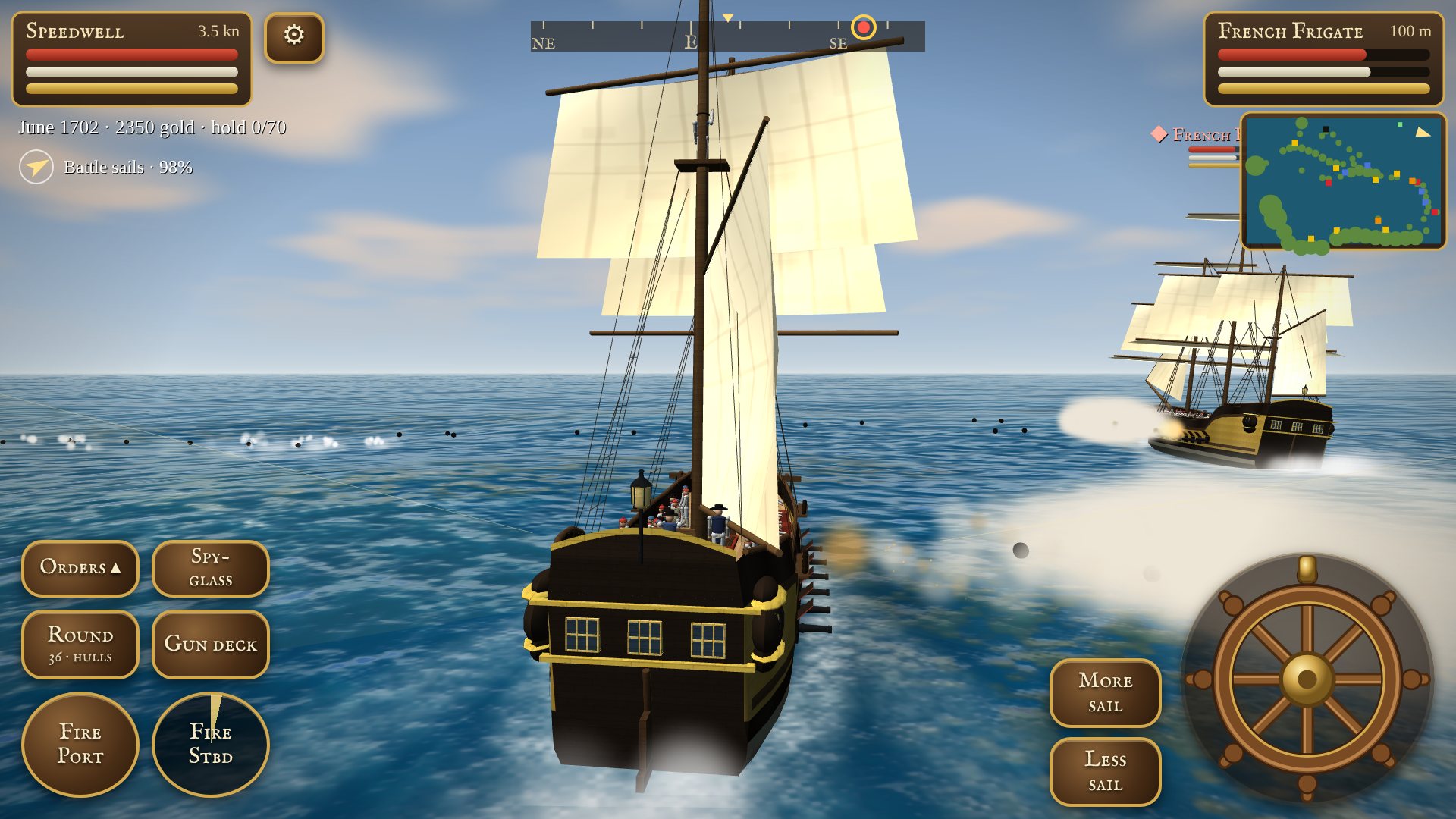
The wind decides where you can go
A square-rigged ship of 1702 could not sail closer than about six points to the wind. In the game a ship pointed nearer than that slows until she is barely moving. Speed depends on your heading against the wind, the sail you have set, the state of your rigging and how foul the ship's bottom has become. The ship to windward chooses the range. The ship to leeward can only accept the fight or run from it.
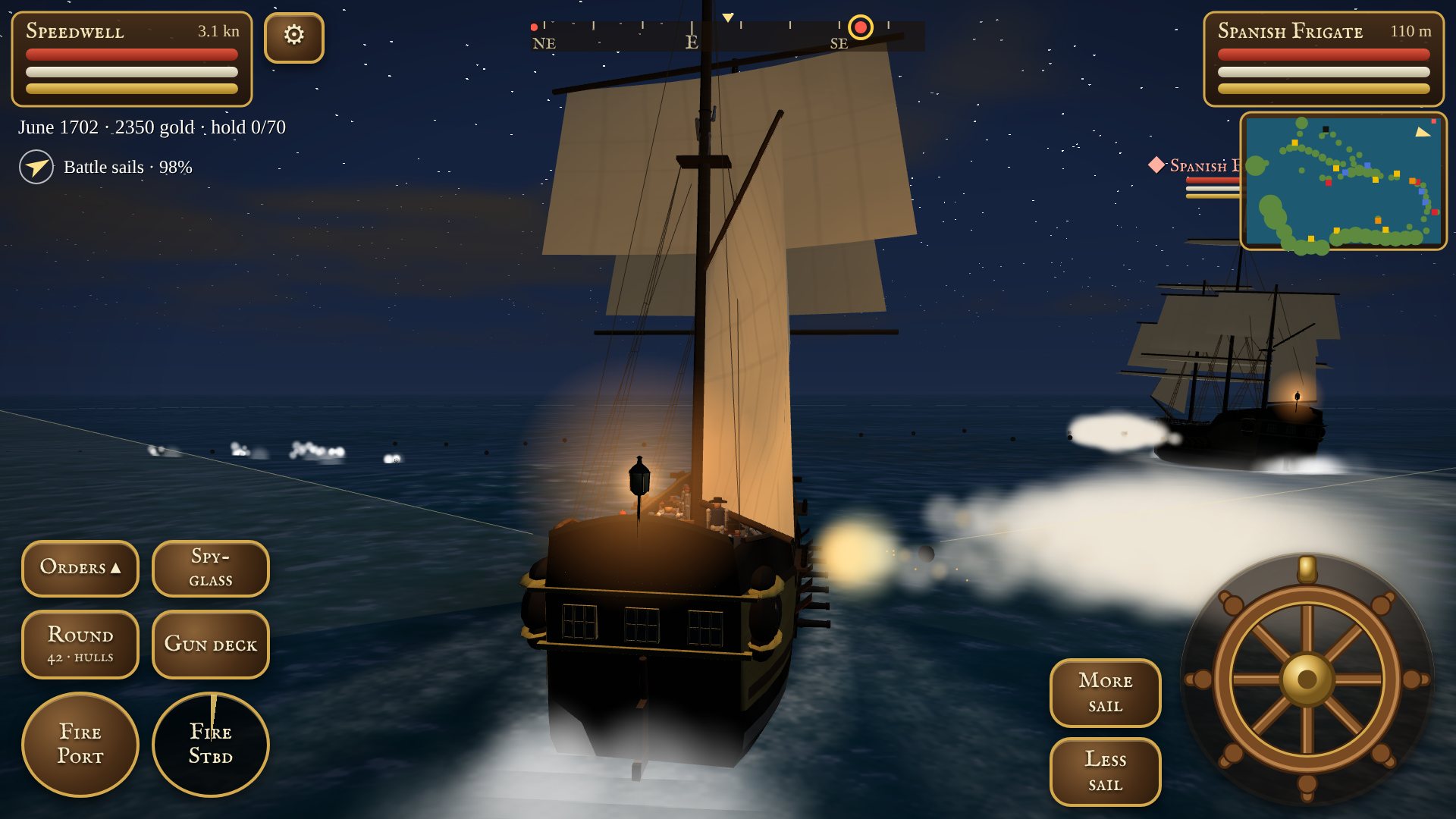
You have three sail settings. Furled sails stop the ship. Battle sails keep her handy and her decks clear. Full sail is for chasing and for getting away. Sails take time to set and to take in, so the order has to be given before you need it.
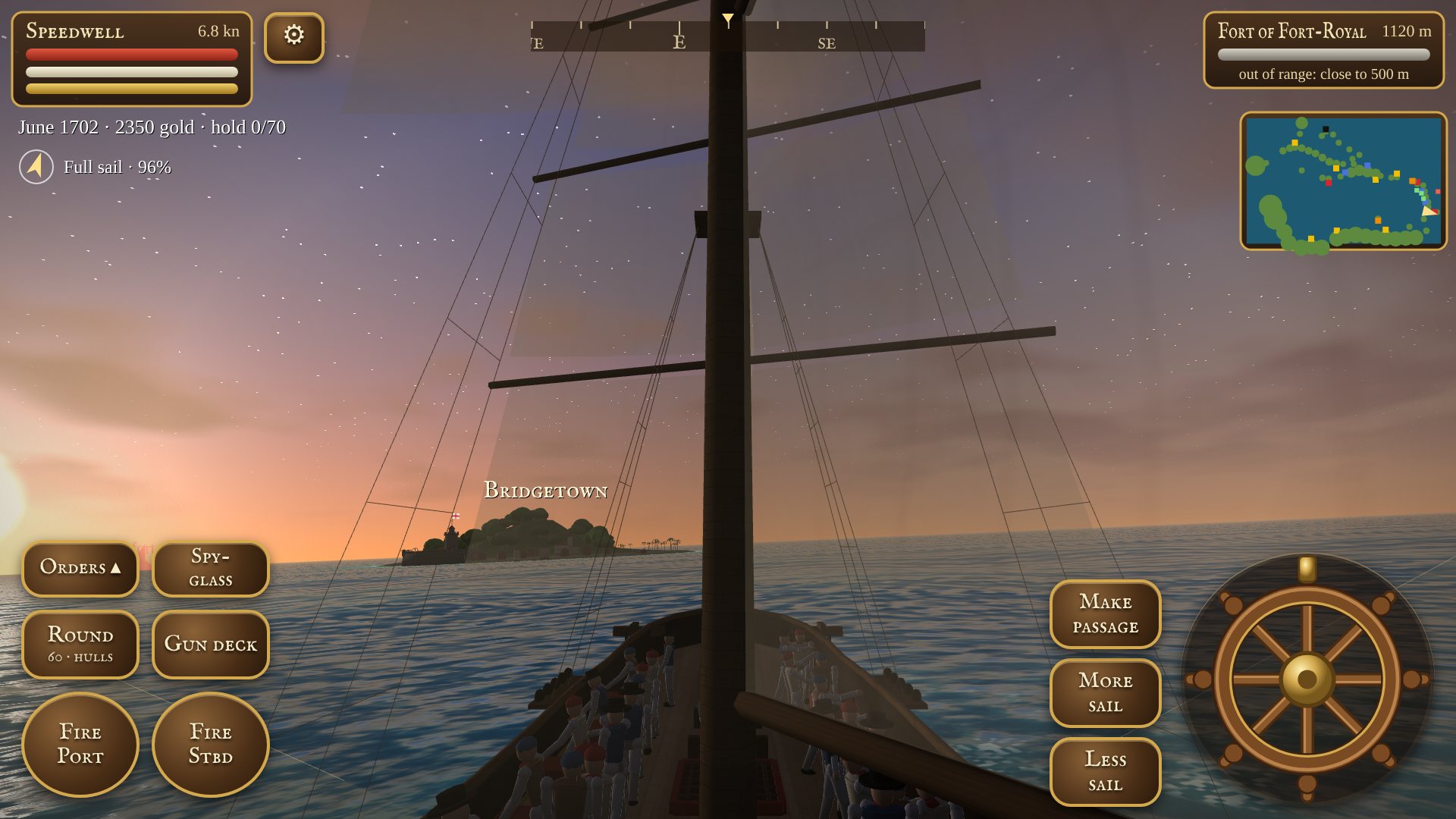
Gunnery
Guns fire real projectiles. A ball leaves the muzzle at a set velocity, loses speed to the air, and falls. Range, the roll of the ship and the elevation of the gun all change where it lands, and a shot fired on the down roll goes into the sea. Near misses skip off the water, as they did.
From the quarterdeck
Order a broadside and the gun captains fire as the target bears. This is quick and it lets you keep your eye on the helm. How well they shoot depends on the difficulty you have chosen and the temper of the crew.
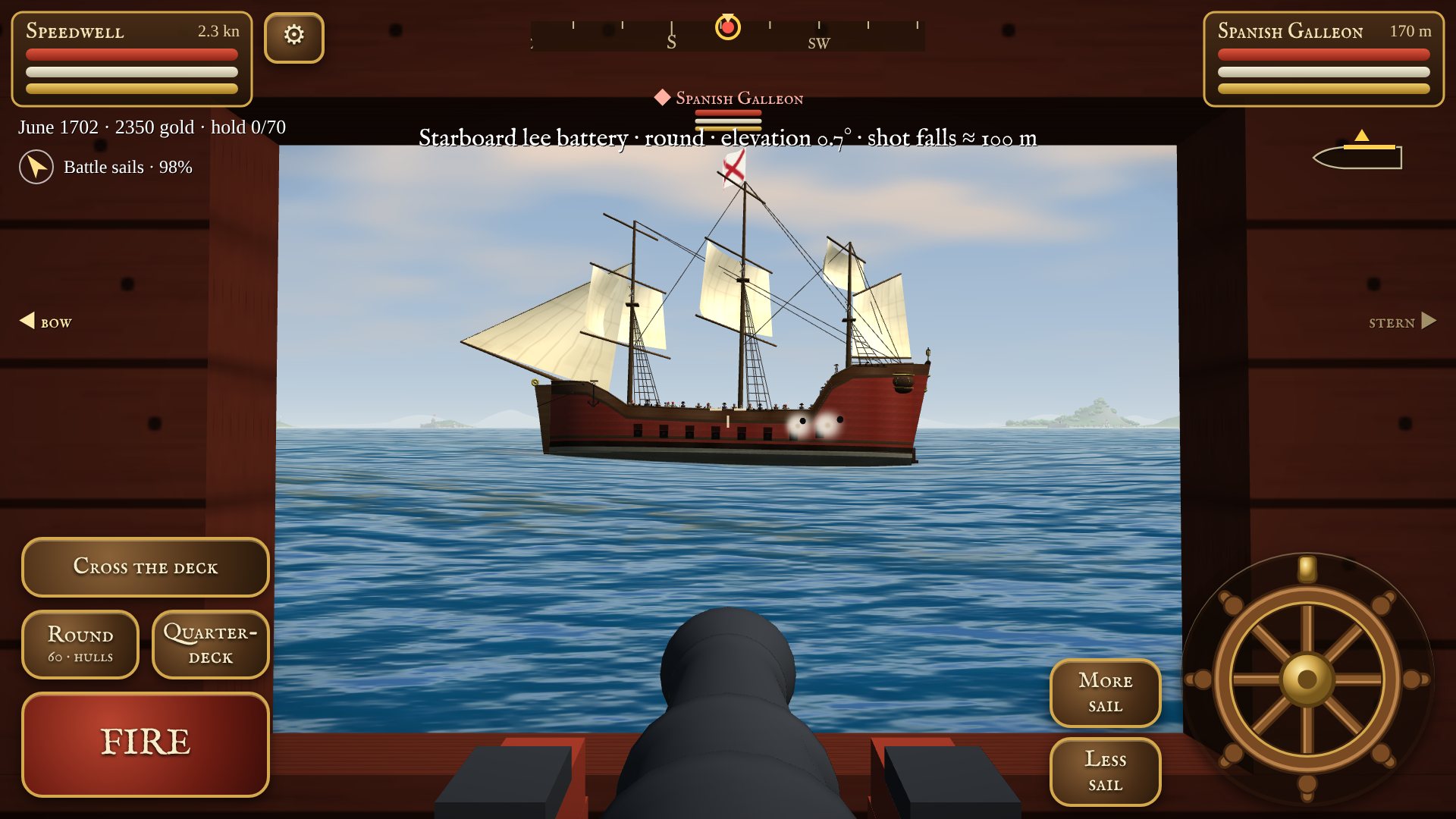
From the gun deck
Go below and lay a gun yourself. You set the elevation and the traverse, watch the fall of shot through the port, and correct. A well-laid gun will hit at ranges where a hurried broadside is wasted.
Four kinds of shot
- Round shot for hulls. It holes a ship at the waterline, dismounts guns and can carry away a rudder.
- Chain shot for masts and sails. It flies less far, and a ship without masts cannot run.
- Grape shot for crews, at close range only.
- Double shot loads two balls to a gun. It is slow to reload and short in range, and very heavy inside pistol shot.
What damage does
Ships do not have a single bar of health that runs down. A hit lands somewhere, and where it lands matters.
You can read a ship's state from a distance. One that has been badly knocked about trails smoke, lists, and shows her shot holes.
- Each mast has its own strength and can go by the board, taking its sails with it.
- Each gun can be dismounted and its crew cut down.
- A hole between wind and water lets the sea in. Men must leave the guns for the pumps, or the ship settles.
- Fire spreads if it is not fought, and a ship that sinks while burning may lose her magazine.
- A broadside fired along the length of an enemy, through her bow or stern, rakes her and does several times the harm.
You decide where your people work: at the guns, at the sails, or at the pumps and repairs. There are never enough hands for all three.
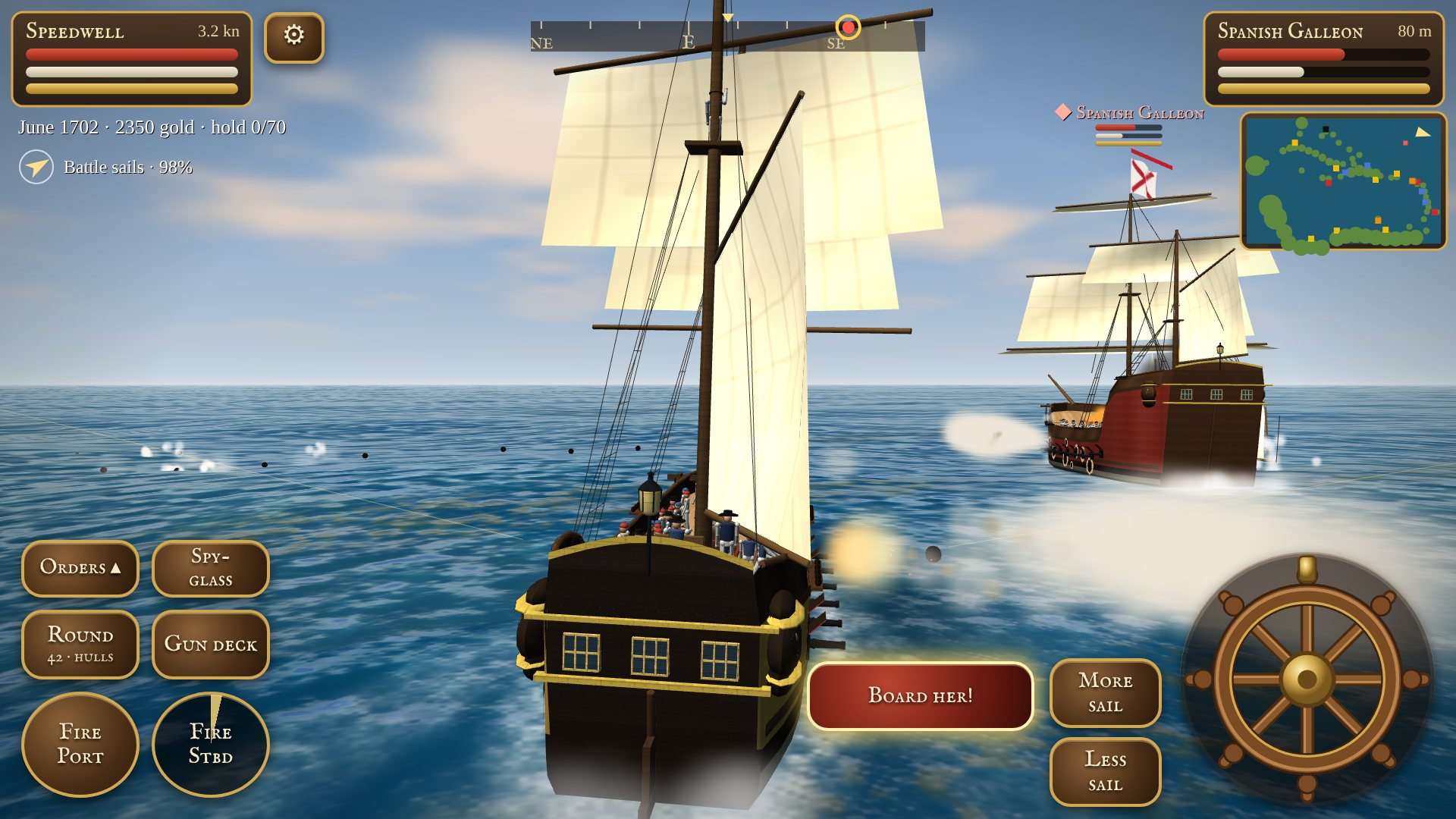
The other captain
Enemy captains do not all fight alike. Some run straight down and hammer you at close range. Some keep their distance and fire chain into your rigging until you cannot manoeuvre. Some work round for your stern when you are slow. Your mate will tell you what kind you are facing. A warship weighs your strength against her own before she engages, and a beaten one bears away for the nearest friendly fort.
Boarding
When you are close alongside you can board. You choose the manner of it. A volley of small arms first costs a moment and thins her deck. A plain rush is fastest. Grenadoes kill and stun before your people cross, though rain spoils the fuses. Stinkpots drive an enemy from a crowded deck if you throw them from windward, and choke your own boarders if you do not. Some merchantmen lay powder chests along the rail, and the mate will warn you when he sees them.
The fight at the rail lasts a few seconds and you watch it happen. Part way through, the mate reports whether they are giving ground or you are, and you choose again: send in every man, lead them yourself, keep on as you are, or call your people back. Afterwards the surgeon's list tells you who among your named hands was hurt, killed or promoted, and the prize money is counted out in front of the crew.
Fireships, forts and bad nights
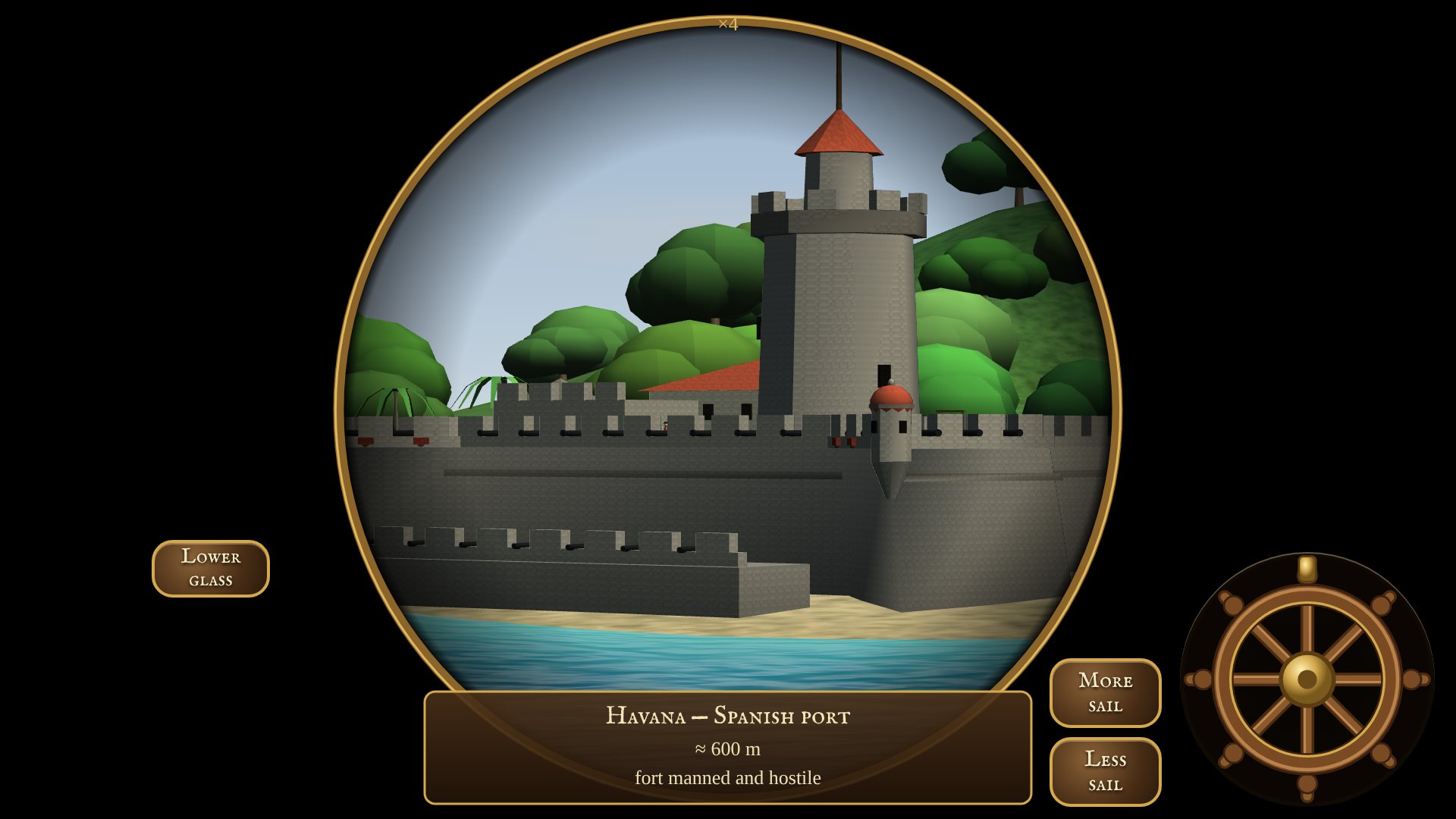
A prize can be fitted as a fireship and sent down on an anchored or crippled enemy. She needs the wind behind her or a slow target, and she can be sunk on the way in. Hostile towns are covered by stone forts with their own guns and garrisons, which can be silenced by bombardment or avoided. Darkness and fog shorten the distance at which ships see one another, which helps the weaker side.
If the fight goes against you there are choices short of sinking. You can strike your colours and pay a ransom. When the hull gives out you may still save her at the pumps, or run her ashore if land is close. The questions page covers these in more detail, and the overview describes the rest of the game.
Take her to sea
The game opens in this browser tab. On a phone, turn it sideways and switch the sound on.